
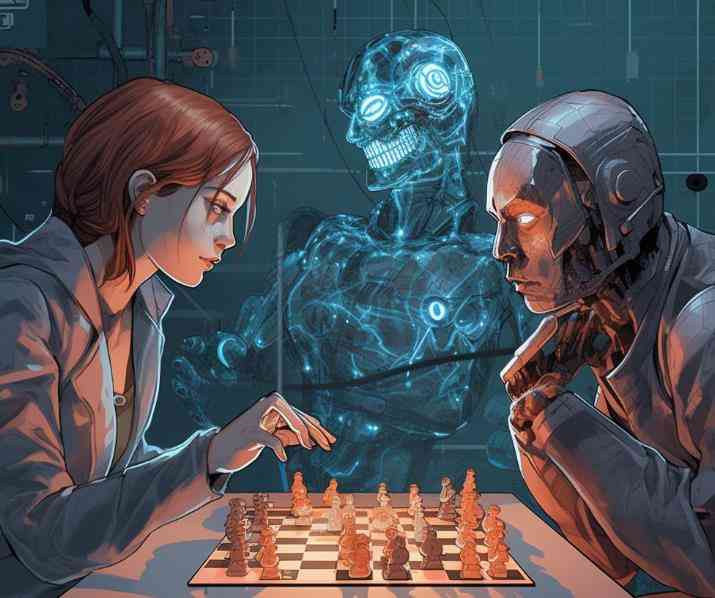
Artificial intelligence is no longer a speculative idea in gaming—it is now one of the industry’s most powerful engines of transformation. Over the past five years, AI has moved from experimental R&D labs into mainstream production pipelines, fundamentally redefining how games are made, how they evolve, and how players experience them.
In 2025, the convergence of advanced neural models, procedural generation, player-behavior analytics, and AI-assisted creative tools has created a new era of game development—one where studios can build richer worlds faster, personalize gameplay at scale, and expand creativity in ways that were impossible with traditional workflows.
For Western gamers who grew up with the golden days of classic RPGs, early 3D worlds, and competitive online titles, the impact of AI feels both exciting and disruptive. For developers, publishers, and investors, AI has become a strategic catalyst for efficiency, innovation, and long-term sustainability. This article explores how AI is reshaping game development from concept to live operations—and why it matters for the future of gaming.
AI-Powered World Building: Generating Richer Universes Than Ever Before
One of the most visible changes in modern game development is AI’s role in world building. Historically, creating environments demanded enormous resources—artists hand-sculpting mountains, designers placing foliage, level builders tuning pathways. Today, procedural generation enriched with modern AI accelerates world creation dramatically.
From Procedural to Intelligent Generation
Procedural generation has existed since Elite and Dwarf Fortress, but neural procedural generation allows environments to adapt, learn, and respond to design intent. Models trained on real-world geography, architectural styles, and narrative cues can generate:
- Vast open-world landscapes
- Realistic city layouts
- Dynamic weather ecosystems
- Biomes with natural ecological logic
- Interiors with functional room arrangements
Instead of hand-placing thousands of assets, developers define high-level creative rules—and AI fills in the details with consistency, density, and realism.
Games like No Man’s Sky, Minecraft, and Baldur’s Gate 3 have paved the way for procedural techniques, but the next generation goes further. AI systems now understand artistic direction, cohesion, and storytelling context. An environment is no longer “random”; it is purpose-driven, lore-driven, and adaptive.
Faster Prototyping Means Faster Innovation
AI dramatically reduces the time required to build and iterate environments. A designer can generate multiple versions of a level within minutes, allowing teams to explore alternative visions quickly. This accelerates:
- Pre-production
- Level layout experimentation
- Gameplay testing
- Art style iteration
- Accessibility improvements
Small studios, especially in North America and Europe’s booming indie scene, now compete with AAA visual complexity—thanks to AI-augmented workflows.
AI as a Creative Partner: Art, Animation, and Writing Reinvented
One of the biggest debates in Western gaming communities surrounds AI-generated art and writing. While players value human creativity, the industry increasingly relies on AI as a productivity multiplier rather than a replacement.
Concept Art at Scale
Concept art pipelines have seen the fastest transformation. AI image models allow artists to:
- Generate moodboards instantly
- Explore multiple art directions
- Visualize characters, props, and maps
- Iterate faster with paint-over workflows
The result isn’t “AI replacing artists,” but artists gaining superpowers. Their role shifts to directing, refining, and curating, rather than manually producing every early sketch.
Animation Enhanced by AI Motion Processing
AI animation tools now streamline tasks such as:
- Motion capture cleanup
- Rigging and retargeting
- Facial animation generation
- In-betweening for 2D animation
- Simulation of crowds and secondary motion
These models preserve natural movement and reduce repetitive manual work, allowing animators to focus on personality, emotion, and storytelling.
AI-Assisted Narrative Design
Narrative teams now use AI to support—but not replace—human writers. Tools can generate:
- Dialogue variations
- World lore suggestions
- Branching narrative outlines
- Character backstories
- In-world descriptions
For RPGs and open-world titles, where writing tens of thousands of lines of dialogue is typical, AI reduces bottlenecks. Writers remain the creative authority, while AI expands their output capacity.
Smarter NPCs and Behaviors: Truly Dynamic Characters
For decades, artificial intelligence in games meant rule-based behaviors: patrol here, attack there, flee at low health. Modern AI adds nuance, memory, and adaptability.
AI NPCs That Learn and React
Neural NPCs can adjust to player patterns, creating deeper, more immersive gameplay. Instead of predetermined mechanics, characters can:
- Change strategies based on your playstyle
- Remember past interactions
- Develop rivalries or alliances
- Offer dynamic dialogue
- React to world events
This is especially impactful in genres like RPGs, survival games, and action adventures.
AI Companions With Personality
Players increasingly expect companions with depth—characters who feel alive. AI-driven companions can exhibit:
- Emotional responses
- Dynamic voice lines
- Personalized behavior loops
- Real-time decision-making
The goal isn’t to replace writers or voice actors but to amplify their work with procedural variation and responsiveness.
AI for Enemy Design
AI helps developers fine-tune enemy balance by simulating thousands of combat scenarios. Difficulty scaling becomes smarter, adaptive, and personalized to each player—ideal for Western audiences who often prefer adjustable or dynamic difficulty.
AI-Driven Game Testing: Reducing Bugs and Improving Quality
Quality assurance is one of the most labor-intensive phases of development. AI testing automation is now reshaping this critical stage.
AI Bots That Play Like Humans
AI-driven QA bots can simulate:
- Combat encounters
- Puzzle solving
- Quest progression
- Multiplayer interactions
- Edge-case scenarios that humans rarely test
They stress-test systems at scale, uncovering hidden bugs long before release.
Predictive Bug Detection
Machine learning models analyze code, gameplay metrics, and crash logs to identify:
- Systems prone to failure
- Memory leak risks
- Physics inconsistencies
- Regressions between builds
This reduces crunch periods and increases overall game stability—an important selling point for US-EU audiences who are increasingly vocal about buggy launches.
AI in Audio: Generating Voices, Soundscapes, and Music
AI’s influence over audio pipelines is growing fast.
Voice Generation and Localization
AI voice tools allow developers to:
- Prototype character voices
- Generate placeholder dialogue
- Localize to dozens of languages
- Create real-time dialogue variants
Western industries use AI responsibly by maintaining transparency, respecting voice actor rights, and utilizing AI primarily for drafting and iteration.
Procedural Soundscapes
AI audio engines produce real-time:
- Footsteps and ambient effects
- Ecosystem sounds that react to time and weather
- Interior acoustics that adapt to space
This adds immersion without requiring thousands of manually triggered sound files.
Adaptive Music
AI-assisted adaptive soundtracks can shift automatically based on:
- Player location
- Threat levels
- Emotional tone
- Time of day in the game
Musicians still compose core themes; AI simply arranges transitions procedurally.
Personalized Gaming Experiences: AI Tailoring Gameplay for Each Player
Personalization is becoming a defining feature of modern gaming. AI enables studios to customize experiences without compromising design vision.
Dynamic Difficulty Adjustments
AI analyzes player behavior—reaction speed, strategy patterns, damage taken—and recalibrates:
- Enemy aggression
- Puzzle complexity
- Loot frequency
- Resource scarcity
This creates a “Goldilocks zone” of challenge tailored to each individual.
Adaptive Storytelling
Narratives can shift based on choices, player psychology, and emergent behaviors. Instead of fixed endings, players get:
- Evolving relationship systems
- Personalized quest lines
- Dynamic consequences
- Unique dialogue branches
This style of storytelling resonates strongly with Western RPG fans.
AI in Live Ops: Keeping Games Thriving After Launch
Live service games rely heavily on AI for operational efficiency and player retention.
AI Balancing and Patch Optimization
ML systems analyze millions of gameplay sessions to detect imbalances, such as:
- Overpowered weapons
- Underperforming abilities
- Economy inflation
- PvP win/loss skew
Developers can release patches faster and with greater precision.
Toxicity Detection and Community Safety
AI moderates:
- Chat systems
- VoIP interactions
- Reported behavior
- Cheating and botting
This is essential for multiplayer titles popular in North America and Europe, where community health strongly influences game longevity.
Player Segmentation and Retention
AI helps identify player groups based on:
- Playtime habits
- Purchasing behavior
- Drop-off risk
- Preferred content types
Studios use these insights to design better events, updates, and seasonal passes.
AI-Enhanced Indie Development: Leveling the Playing Field
The Western indie community has exploded thanks to AI tools that empower small teams to achieve AAA-like production quality.
One-Person Studios Are Now Viable
Solo developers can use AI for:
- Art generation
- Sound design
- Programming assistance
- Animation tools
- Asset creation
- Narrative drafts
This democratizes game creation and mirrors earlier revolutions sparked by engines like Unity and Unreal.
Lower Costs, Higher Creativity
AI reduces outsourcing and production time, allowing indies to allocate more budget to:
- Marketing
- Polishing
- Distribution
- Cross-platform support
As a result, Western players get richer, more diverse games from independent creators.
Ethical and Creative Debates: What AI Should and Should Not Do
The adoption of AI in game development also sparks important debates in the US and EU markets.
Preserving Human Creativity
Gamers value authenticity. Studios need to ensure:
- AI supports rather than replaces human roles
- Artists retain creative ownership
- Writers remain the core narrative architects
- Voice actors are respected and compensated
The industry is developing best practices that balance innovation with artistic integrity.
Copyright and Data Ethics
As regulators in the US and Europe examine AI training data, game studios must navigate issues related to:
- Data provenance
- Model licensing
- AI-generated IP ownership
- Ethical training sets
Transparent AI pipelines will become a competitive advantage.
Employment and Workforce Evolution
AI will not eliminate jobs but shift roles toward:
- Creative direction
- High-level design
- Technical integration
- Quality oversight
Teams that embrace AI will build the most compelling games moving forward.
What the Future Holds: AI as a Core Pillar of Game Development
Looking ahead, AI is poised to become as fundamental to game development as modern game engines. The next generation of AI-driven games may feature:
- Universes that evolve autonomously
- Characters with persistent memory and personalities
- Real-time narrative co-creation
- Fully simulated ecosystems
- Personalized campaigns for every player
- Ultra-efficient pipelines that reduce production cycles by 50–70%
At the same time, human creativity will remain at the heart of gaming. AI will be a tool—an extraordinarily powerful one—but the soul of a game will always come from developers’ imagination, passion, and lived experiences.
AI Is Not the Future of Game Development—It Is the Present
AI has already transformed game development pipelines at every stage, from art direction to live operations. It empowers small studios to thrive, helps AAA teams build more ambitious worlds, improves player experiences, and drives innovation across the industry.
For Western audiences, AI is shaping not just how games are made, but what games can be. It brings new creative horizons, dynamic gameplay, smarter characters, and worlds that feel truly alive.
As studios navigate ethical considerations and refine best practices, one truth is clear: AI is now a central force in modern gaming—and its influence will only grow. The games of tomorrow will be more immersive, more reactive, and more personal than ever before, powered by a synergy of human creativity and AI-driven possibility.



Leave a Reply