
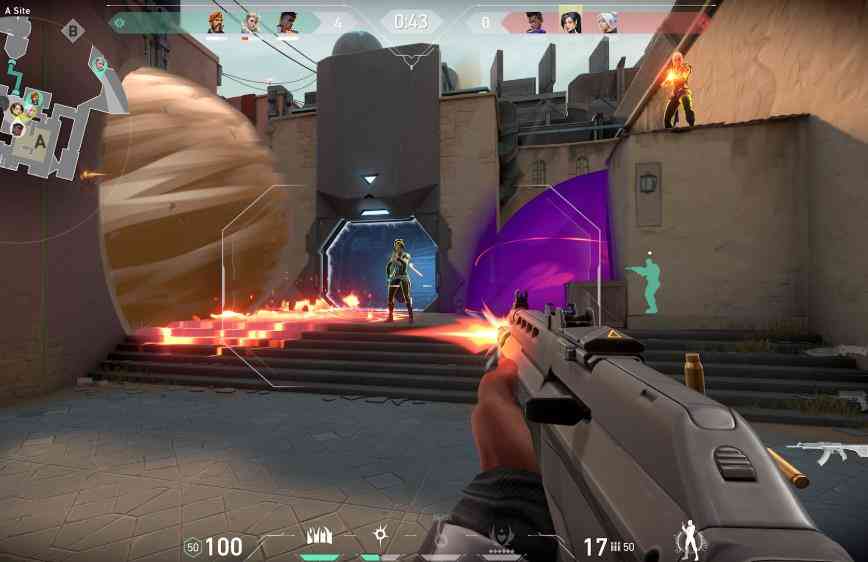
Since its official release in 2020, Valorant has firmly established itself as one of the most influential competitive first-person shooters in the modern gaming landscape. Developed by Riot Games, the title entered a genre long dominated by legacy franchises such as Counter-Strike and Call of Duty, yet managed to carve out a distinctive identity by blending precise tactical gunplay with hero-based abilities.
Five years later, in 2025, Valorant remains one of the most played and discussed competitive shooters in North America and Europe. It boasts a strong esports ecosystem, millions of active players, and a steady cadence of updates introducing new agents, maps, and balance changes. However, longevity in live-service games often brings its own challenges: community fatigue, balance controversies, smurfing, rising skill ceilings, and increasing pressure on casual players.
This raises an important question for both new and returning players: Is Valorant still worth playing in 2025?
This review takes a comprehensive look at the game’s mechanics, competitive systems, accessibility, community health, monetization, and long-term value — with a particular focus on what matters most to Western audiences.
Core Gameplay: Tactical FPS Meets Hero Abilities
At its core, Valorant is a 5v5 round-based tactical shooter. One team attacks, planting a device called the Spike, while the other defends. Rounds are short, lethal, and heavily dependent on positioning, crosshair placement, economic decisions, and teamwork. In this sense, Valorant clearly inherits much of its DNA from Counter-Strike.
What differentiates Valorant from traditional tactical shooters is its Agent system. Each Agent belongs to a specific role — Duelist, Controller, Initiator, or Sentinel — and comes equipped with a unique set of abilities. These abilities range from smoke screens and reconnaissance tools to crowd control effects and mobility skills.
Importantly, abilities do not replace gunplay; they support it. Success in Valorant still depends primarily on mechanical skill, reaction time, and decision-making. Abilities add layers of strategy rather than overshadowing the shooting fundamentals.
In 2025, this hybrid design continues to be Valorant’s strongest feature. It offers a level of tactical depth that appeals to players who enjoy strategic planning and coordination, while still rewarding pure mechanical skill. The balance between guns and abilities remains tighter than in many competing hero shooters, helping preserve the game’s competitive integrity.
Gunplay and Mechanics: Precision Above All
One of the most praised aspects of Valorant is its gunplay. Weapons have strict recoil patterns, first-shot accuracy is paramount, and movement significantly affects shooting precision. Running and gunning is heavily punished; players are expected to stop, aim, and commit to engagements.
This design philosophy places Valorant firmly in the “high-skill, low-forgiveness” category. Every mistake — a missed shot, poor positioning, or a mistimed ability — can cost an entire round. For experienced FPS players, this creates a deeply rewarding learning curve. Improvement is measurable, tangible, and satisfying.
In 2025, the gun balance remains largely stable. Riot Games continues to make incremental adjustments rather than radical overhauls, which helps maintain consistency for long-term players. Weapons such as the Vandal and Phantom still define the meta, while situational weapons retain niche viability.
However, this commitment to precision also contributes to one of Valorant’s most significant barriers to entry: the high skill floor. New players often struggle to feel effective, especially when matched against more experienced opponents. While the mechanics are fair and consistent, they are unforgiving.
Agents and Meta Evolution
As of 2025, Valorant features a large and diverse roster of Agents. Riot Games has continued to introduce new characters at a steady pace, each designed to fill specific tactical niches. While early concerns about “ability creep” were justified, Riot has largely managed to keep the roster balanced through frequent tuning.
The meta in Valorant is not static. Agent viability shifts depending on map design, balance patches, and professional play trends. This constant evolution keeps the game fresh for dedicated players, especially those who enjoy experimenting with team compositions and strategies.
For Western audiences accustomed to competitive balance debates, Valorant’s transparent patch notes and developer communication are a strong positive. Riot Games actively explains the reasoning behind changes, which builds trust within the competitive community.
That said, learning the expanding Agent roster can be overwhelming for newcomers. Understanding ability interactions, counters, and optimal usage takes time. In 2025, Valorant demands not only mechanical skill but also game knowledge, which can be intimidating for players looking for a more casual experience.
Maps and Tactical Variety
Map design plays a crucial role in Valorant’s identity. Each map is built around chokepoints, sightlines, and ability interactions. Verticality, destructible objects, and unique environmental features introduce additional strategic considerations.
While Riot Games has introduced several new maps over the years, map reception remains mixed. Some designs are widely praised for balance and flow, while others have faced criticism for narrow choke points or defender- or attacker-favored layouts.
In 2025, Valorant’s map pool is solid but not universally loved. Competitive players appreciate the depth and structure, while casual players sometimes find maps restrictive or repetitive. Nonetheless, regular map rotations and reworks help mitigate long-term stagnation.
Competitive Systems and Ranked Play
Ranked mode is the backbone of Valorant’s long-term engagement. The ranking ladder — from Iron to Radiant — provides a clear progression system that appeals strongly to competitive-minded players.
In 2025, ranked matchmaking has improved compared to the game’s early years, but it is not without flaws. Skill disparity within matches, inconsistent teammate quality, and smurf accounts remain common complaints, particularly in lower and mid-tier ranks.
For players who enjoy structured competition, ranked mode offers intense, high-stakes gameplay. Every match feels meaningful, and climbing the ladder provides a strong sense of achievement. However, this intensity can also lead to burnout, frustration, and heightened toxicity.
Community and Social Environment
Community health is one of Valorant’s most divisive aspects. On one hand, the game has a massive, active global player base and a thriving esports scene. On the other, competitive pressure often brings out negative behavior.
In voice and text chat, toxicity remains a persistent issue. Verbal harassment, blame-shifting, and negative attitudes are common, particularly in ranked play. Riot Games has implemented reporting systems, automated voice moderation, and penalties, but these measures have not fully solved the problem.
For Western audiences who value respectful online interactions, this can significantly impact enjoyment. Playing with friends or premade groups greatly improves the experience, while solo queue can be mentally exhausting.
Esports and Spectator Appeal
One of Valorant’s strongest assets in 2025 is its esports ecosystem. The Valorant Champions Tour (VCT) has become a major fixture in global esports, with professional leagues in North America, Europe, and beyond.
The game is highly watchable. Clear visual design, distinct abilities, and structured rounds make it accessible even to casual viewers. For players interested in competitive scenes, learning from professional matches enhances both understanding and appreciation of the game.
This strong esports presence reinforces Valorant’s long-term relevance and cultural footprint, particularly in Western gaming communities.
Monetization and Cosmetic Systems
Valorant operates on a free-to-play model. All gameplay-impacting content is accessible without spending money. Monetization is focused entirely on cosmetics, primarily weapon skins and Battle Passes.
While this approach preserves competitive fairness, cosmetic prices are a frequent point of criticism. Premium skin bundles can be expensive, and limited-time offers encourage impulse purchases. For some players, this pricing model feels aggressive.
That said, spending is optional. Players can fully enjoy the game without ever paying, which aligns well with Western expectations of fair free-to-play design.
Accessibility and Time Commitment
Valorant is not a casual pick-up-and-play experience. Matches are relatively long, focus levels are high, and consistent practice is required to remain competitive.
For players with limited time or those seeking a relaxed experience, Valorant may feel demanding. However, for individuals who enjoy mastery-based systems and long-term improvement, this depth is precisely what makes the game appealing.
Hardware requirements remain modest in 2025, allowing the game to run smoothly on a wide range of PCs, which continues to be a major advantage.
Is Valorant Worth Playing in 2025?
In 2025, Valorant remains one of the most refined and rewarding competitive shooters available. Its precise gunplay, strategic depth, strong esports scene, and ongoing developer support ensure its continued relevance.
However, it is not a game for everyone. The high skill ceiling, intense competitive environment, community toxicity, and time commitment may deter casual players or those seeking a more relaxed experience.
Who should play Valorant in 2025?
- Competitive FPS players
- Fans of tactical shooters
- Players who enjoy long-term mastery and improvement
- Esports enthusiasts
Who might want to avoid it?
- Casual or occasional players
- Players sensitive to competitive pressure or toxicity
- Those looking for short, stress-free sessions
Ultimately, Valorant is still worth playing in 2025 — but only if you are willing to engage with it on its own terms. For the right audience, it remains one of the most compelling competitive experiences in modern gaming.


Leave a Reply