
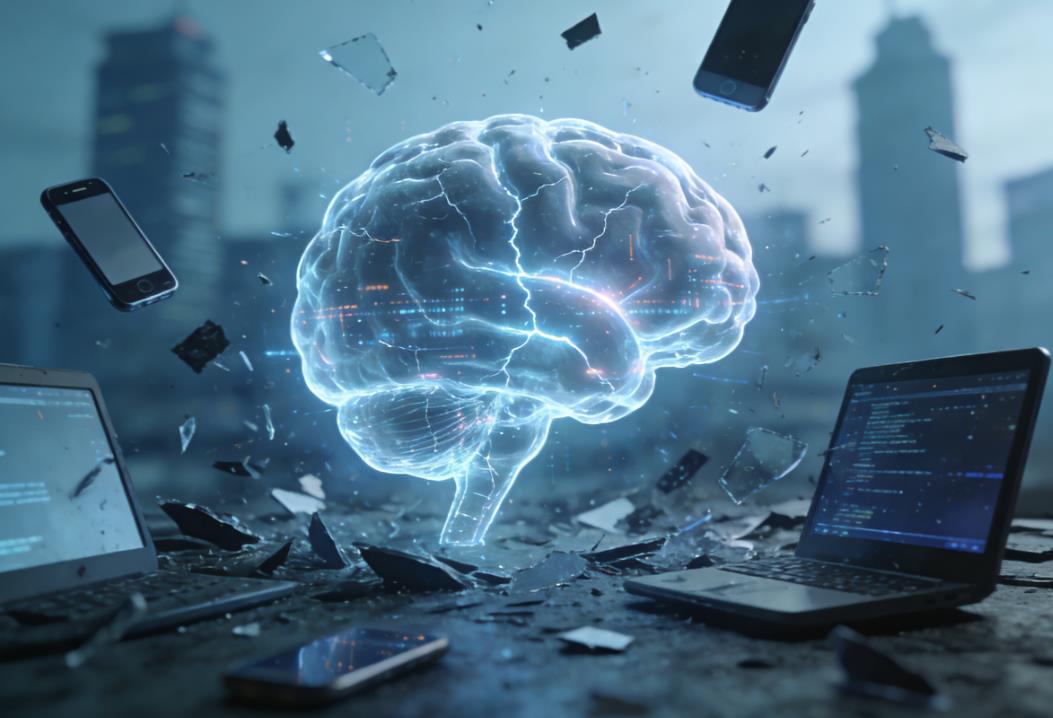
In the 21st century, the fast pace of modern life and the widespread adoption of digital technology have introduced new sources of psychological stress. Smartphones, social media, 24/7 news updates, remote work, online shopping, instant messaging, and virtual social activities have made it nearly impossible for individuals to disconnect from the digital world. While these technologies offer unprecedented convenience and efficiency, they also present continuous challenges to mental health, particularly in relation to anxiety. In Western countries, this phenomenon is increasingly prevalent, with young adults and adolescents reporting high levels of stress and unease in digital environments.
Anxiety is a natural human response to potential threats and originally served as a protective mechanism. However, in contemporary society, anxiety systems are frequently overactivated by non-threatening stimuli. Notifications from social media, instant responses expected in work emails, alarming news updates, and continuous monitoring of social interactions can all trigger prolonged tension, potentially resulting in chronic anxiety. Clinically, when this persistent worry disrupts daily functioning, it can manifest as generalized anxiety disorder (GAD), social anxiety disorder, or panic disorder. According to the World Health Organization (WHO), more than 264 million people worldwide experience anxiety disorders, with rates particularly increasing among younger populations in Western countries.
Social media has become a central factor in modern anxiety. Fear of missing out (FOMO) has emerged as a hallmark of psychological distress in the digital era. Young people frequently check platforms like Instagram, TikTok, Snapchat, and Facebook to observe friends’ curated highlight moments, leading to constant comparisons with their own lives. This social comparison often triggers self-doubt and feelings of inadequacy. Studies indicate that heavy social media users are more likely to experience lowered self-esteem, body dissatisfaction, emotional volatility, and increased anxiety. Visual-heavy platforms, such as short-video apps, often amplify this “highlight reel effect,” encouraging users to measure their lives against others’ curated best moments, thereby intensifying psychological pressure.
Cyberbullying and online harassment further exacerbate anxiety in the digital age. Adolescents and young adults are particularly vulnerable to online attacks, including negative comments, harassment, and social exclusion. Prolonged exposure to cyberbullying increases feelings of loneliness, depressive symptoms, and self-harm risk while negatively impacting academic performance and social skills. Research in Western countries shows that adolescents who experience cyberbullying are nearly twice as likely to develop anxiety disorders compared to peers who do not, a trend that became more pronounced during the COVID-19 pandemic. Moreover, social validation mechanisms, such as likes and comments, can create psychological dependency, reinforcing anxiety and stress in digital interactions.
Information overload is another major contributor to digital-age anxiety. Individuals today are exposed to far more information than the brain can effectively process, including work emails, instant messages, social media updates, news alerts, and advertising. Information overload leads to attention fragmentation, memory decline, decision-making difficulties, and cognitive fatigue, increasing stress and anxiety levels. In remote work environments, the constant flow of emails, collaboration tools, and virtual meetings makes it nearly impossible to achieve sustained focus or mental rest. Research in psychology indicates that prolonged multitasking not only elevates stress hormone levels but also diminishes cognitive control, leaving individuals more susceptible to rumination and negative thought cycles.
The 24-hour news cycle further amplifies anxiety. Global events, such as pandemics, wars, economic fluctuations, and climate crises, are constantly broadcasted through media and social platforms, making it nearly impossible to disengage from perceived threats. Long-term exposure to negative news heightens vigilance, fosters catastrophic thinking, and increases cortisol levels, resulting in chronic stress. This sustained state of tension can negatively affect mood, disrupt sleep, and weaken the immune system, increasing risks to physical health. Studies in Western countries indicate that adolescents and young adults are particularly sensitive to breaking news and alarming content, making them highly susceptible to anxiety in the digital era.
The psychological impact of the COVID-19 pandemic has further intensified these trends. Lockdowns, school closures, and remote work disrupted daily routines and social interactions, exacerbating feelings of loneliness and health-related anxiety while increasing reliance on digital platforms for social connection. Many adults experienced heightened social anxiety upon returning to in-person interactions, while adolescents faced challenges in adapting socially after prolonged online learning and reduced face-to-face communication. Surveys in Europe and North America reveal that nearly one-third of adolescents report moderate to severe anxiety symptoms post-pandemic, with adults—especially working professionals and caregivers—also exhibiting increased anxiety levels.
Understanding the mechanisms underlying anxiety helps inform effective coping strategies. Cognitive-behavioral theory posits that anxiety is maintained by automatic negative thoughts, cognitive distortions, and avoidance behaviors. For example, seeing a friend’s vacation photos may trigger catastrophic thoughts like “everyone’s life is better than mine,” leading to social withdrawal or rumination. From a neuroscience perspective, digital stimuli activate the sympathetic nervous system and the hypothalamic-pituitary-adrenal (HPA) axis, placing individuals in a chronic low-level state of arousal. The human brain evolved to respond to acute threats, but in the face of continuous digital input, the stress response system remains persistently engaged, contributing to chronic anxiety, sleep disturbances, and cognitive fatigue.
Fortunately, modern psychology offers evidence-based strategies for managing anxiety. Cognitive-behavioral interventions (CBT) can help individuals identify and restructure negative thought patterns, improving behavior and emotional responses. For example, the urge to immediately respond to every notification can be mitigated by adopting more balanced thinking, recognizing that delayed responses are socially acceptable and do not reflect personal inadequacy. Behavioral activation encourages gradual exposure to feared or avoided situations, such as setting defined social media usage times and increasing offline social or physical activities, thereby breaking cycles of anxiety. Keeping a structured log of triggers, emotional responses, and behaviors can help individuals gain insight into patterns of reactivity and reduce unconscious negative cycles.
Mindfulness practices have also demonstrated substantial efficacy in managing digital-age anxiety. Mindful breathing exercises and body scans help regulate the autonomic nervous system, reduce tension, and improve attention control and emotional regulation. Mindfulness can also be applied directly to digital interactions; for instance, noticing the impulse to check notifications without acting on it cultivates non-reactive awareness. These techniques not only reduce anxiety but also improve sleep quality, emotional stability, and psychological resilience.
A healthy lifestyle is essential for mitigating anxiety in the modern world. Reasonable screen-time limits, consistent sleep schedules, sufficient rest, and regular physical activity have all been shown to significantly reduce anxiety levels. Research indicates that 150 minutes of moderate-intensity exercise per week can improve mood and mental health, reducing anxiety symptoms. Creating digital boundaries, such as turning off notifications outside of work or avoiding screens before bedtime, allows the brain necessary rest and recovery, alleviating sustained mental strain.
While many cases of anxiety can be managed through self-regulation, persistent anxiety that interferes with daily functioning, accompanied by panic attacks or depressive symptoms, requires professional intervention. Cognitive-behavioral therapy (CBT), acceptance and commitment therapy (ACT), and, when necessary, pharmacological treatments are scientifically validated approaches to alleviate symptoms. The rise of online counseling and telehealth services has also made professional mental health support more accessible, offering new avenues for coping with digital-era stress. Early intervention for severe anxiety or comorbid conditions is particularly important, reducing long-term psychological risks.
Looking forward, the psychological challenges posed by digital life will continue to evolve with emerging technologies such as artificial intelligence, virtual reality, and always-connected devices. Researchers are investigating how augmented reality and virtual environments affect anxiety, as well as the impact of AI-driven personalized social platforms on mental health. While technological advancements provide convenience, they also underscore the importance of ethical design and a human-centered approach. Individuals must learn to balance digital convenience with mental health, mastering self-regulation to cope with information overload, social pressures, and the constant demands of connected life.
In conclusion, modern digital life offers unparalleled convenience but introduces new challenges for mental health. Anxiety is not a personal weakness; it is a natural response to information overload, social pressures, and a perpetually connected environment. Through cognitive restructuring, mindfulness practice, healthy lifestyle habits, and professional intervention when necessary, individuals can strengthen psychological resilience, manage digital stress effectively, and maintain mental well-being in contemporary society. Learning to regulate one’s digital engagement, balancing online and offline life, is essential for achieving emotional stability, personal satisfaction, and overall life quality.



Leave a Reply