
Why Emotional Intelligence Matters
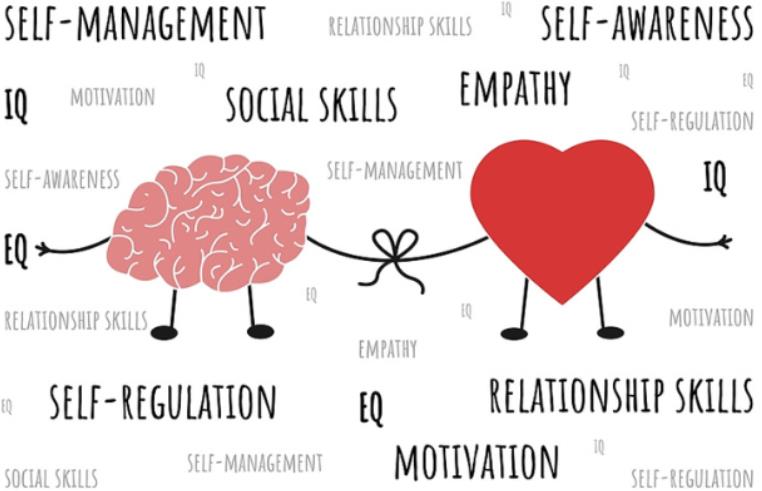
Imagine a manager who notices a team member’s frustration before it escalates, or a parent who calmly navigates a toddler’s tantrum without losing composure. What sets these individuals apart is not just experience or IQ but Emotional Intelligence (EQ). Emotional Intelligence, first popularized by psychologist Daniel Goleman, refers to the ability to recognize, understand, and manage our own emotions, as well as the emotions of others. Unlike IQ, which tends to remain relatively stable, EQ is highly adaptable and can be developed with deliberate practice.
Goleman identifies five key components of EQ: self-awareness, self-management, social awareness, relationship management, and intrinsic motivation. These skills are crucial for success across personal relationships, professional environments, and overall well-being. Research consistently shows that individuals with high EQ tend to have better mental health, stronger social networks, and greater career success.
Example: Oprah Winfrey, renowned for her empathy and communication skills, often attributes her success to understanding and connecting with people on a deep emotional level, demonstrating the power of EQ in action.
The Science Behind Emotional Intelligence
Recent neuroscience has shed light on why EQ is trainable. The prefrontal cortex, responsible for higher-order thinking, decision-making, and emotion regulation, works closely with the amygdala, which detects and responds to emotional stimuli. This connection allows us to modulate our emotional responses consciously. Studies also highlight the role of mirror neurons, which help us empathize by simulating the emotions of others in our own brains.
Psychological research reinforces these findings. In a study conducted at Yale University, participants trained in emotional awareness and regulation showed measurable improvements in stress management and interpersonal interactions. Another study in the Journal of Organizational Behavior found that employees with high EQ contributed to more cohesive and productive teams.
Did You Know?
Employees with high emotional intelligence are 40% more likely to be promoted within two years, according to a 2020 Harvard Business Review study.
Core Components of EQ and How to Improve Them
- Self-Awareness
Understanding your own emotions is the foundation of EQ. It involves recognizing emotional triggers and patterns.- Practice: Keep a daily emotion journal; note situations that trigger strong feelings and reflect on your reactions.
- Example: Bill Gates often reflects on his decision-making process, noting emotional biases before major business moves, showcasing high self-awareness.
- Self-Management
This is the ability to regulate your emotions, particularly in stressful situations. Techniques include:- Deep breathing and mindfulness exercises
- “Pause before reacting” strategy to prevent impulsive responses
- Cognitive reframing to shift perspective on challenging events
5-Minute Self-Management Exercise
- Identify a stressful event from today.
- Take 5 deep breaths, inhaling 4 seconds, exhaling 6 seconds.
- Reflect: How could I respond more calmly?
- Write down one action to manage this emotion better next time.
Social Awareness
Being attuned to others’ emotions is critical for meaningful connections.
- Techniques: Active listening, observing body language, asking empathetic questions.
- Example: Angela Merkel’s diplomatic success is often attributed to her keen social awareness, reading subtle cues and adjusting her communication style accordingly.
Relationship Management
EQ shines in the ability to manage interactions effectively:
- Giving constructive feedback
- Resolving conflicts diplomatically
- Building trust and rapport over time
Intrinsic Motivation
People with high EQ are motivated by inner goals rather than external rewards. Techniques to nurture this include:
- Setting personal development goals
- Maintaining a positive internal dialogue
- Celebrating small achievements
Practical Strategies with Real-Life Examples
- Daily Reflection: Spend 10 minutes assessing emotional responses from the day; over time, this improves self-awareness.
- Empathy Walk: Imagine the perspective of someone you interact with, helping strengthen social awareness.
- Stress-Management Toolbox: Prepare techniques (deep breathing, short walks, mindfulness apps) for immediate emotional regulation.
Data Insight: A 2019 meta-analysis in Personality and Individual Differences found that structured
Quick EQ Self-Check:
How often do you reflect on your emotions at the end of the day?
Making Emotional Intelligence a Habit
Improving EQ is less about overnight transformation and more about daily, intentional practice. Start with small, actionable steps:
- Keep a daily emotion journal.
- Practice mindfulness or meditation for 5–10 minutes.
- Use reflective questions before responding in challenging situations.
- Engage in empathy exercises—listen actively without judgment.
- Celebrate progress, not perfection.
Example: Satya Nadella, CEO of Microsoft, emphasizes a “growth mindset” at work. By fostering self-awareness and empathy across his teams, he transformed Microsoft’s culture, illustrating that high EQ is a practical, trainable skill that drives results.
Key Takeaways
- EQ can be improved through deliberate practice.
- Self-awareness is the first step toward emotional mastery.
- Empathy and social awareness enhance personal and professional relationships.
- Small daily habits lead to measurable long-term growth in EQ.
Emotional Intelligence is a dynamic, trainable skill set that shapes our interactions, career success, and personal fulfillment. By understanding the science behind emotions and applying practical strategies—from self-awareness journaling to empathy exercises—you can steadily enhance your EQ. With consistent effort, the benefits ripple through every facet of life: healthier relationships, better stress management, and greater overall well-being.
Remember, even small, intentional actions can lead to profound changes. Start today—reflect, listen, and respond with awareness. Your future self, and those around you, will thank you.


Leave a Reply