
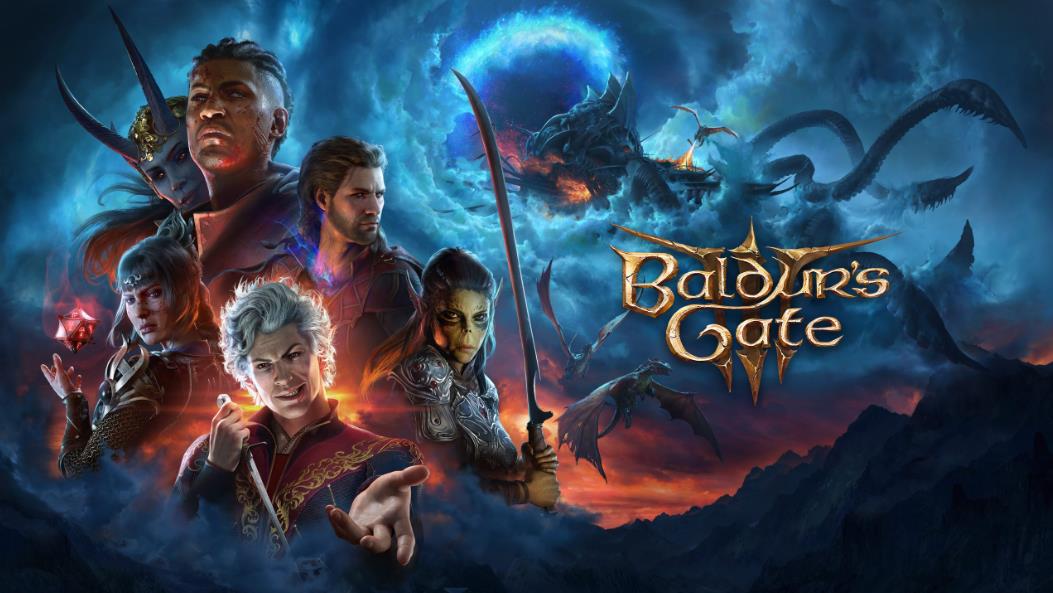
When Baldur’s Gate 3 finally exited early access and launched fully in 2023, few could have predicted the cultural and critical impact it would have on the RPG genre. Built by Larian Studios, the game not only revived a classic franchise rooted in the Dungeons & Dragons tabletop tradition, it also set a new benchmark for narrative depth, player freedom, and community engagement in Western role‑playing games. Several years after release, Baldur’s Gate 3 remains a touchstone in RPG excellence, celebrated as both a technical and creative triumph that continues earning accolades and fostering player devotion well into 2025 and 2026.
This review dissects every major facet of the experience — from its ambitious worldbuilding and flexible systems to its triumphs and stumbles — to give a balanced, definitive look at what makes this game so special.
A Story Forged by Player Choice
At its heart, Baldur’s Gate 3 is a story about transformation — both personal and cosmic. You begin as a character infected with a mysterious and parasitic tadpole that promises power while threatening your humanity. From this unsettling beginning, the game launches you into a sprawling narrative set in the Forgotten Realms, a storied world of magic, conflict, and ancient power struggles. The plot weaves together competing forces of gods, devils, and enigmatic arcane threats, with your choices shaping not just the ending, but the tone of an entirely unique playthrough.
This central narrative thread is enormous, sprawling, and deeply immersive, and it’s supported by hundreds of hours of dialogue and cinematic content. One of the game’s crowning achievements is just how personalized your journey feels: your allies, decisions, romances, betrayals, and even casual conversations leave meaningful traces on the world’s tapestry. By design, no two campaigns ever unfold the same way.
Narrative Freedom and Consequence
Where many games offer branching stories, Baldur’s Gate 3 makes choice the core mechanic, not just a narrative ornament. Dialogue paths, character reactions, quest outcomes, and even combat approaches all change dynamically based on your decisions. Sometimes this results in subtle ripple effects — NPCs referencing your past kindness — while other moments reshape entire regions of the world you explore.
This vast narrative impact strategy isn’t just theoretical — it delivers real replay value unmatched by most RPGs. Critics and players alike highlight the skillful interplay between choice and story, calling it one of the deepest implementations of interactive narrative in modern gaming.
Systemic Depth: Combat and Character Mechanics
If the narrative sets the stage, the game’s mechanics are the engine that drives it. Baldur’s Gate 3 faithfully adapts the fifth edition of Dungeons & Dragons rules into digital form. But rather than simply transplanting tabletop mechanics, Larian reimagines them for accessibility and immersion — walking a fine line between complexity and approachability.
Turn‑Based Combat That Rewards Creativity
Combat in Baldur’s Gate 3 unfolds as a turn‑based ballet of strategy and surprises. Initiative order matters, terrain can be manipulated, and environmental effects — like pushing foes off cliffs or igniting puddles of oil — regularly turn the tide of battle. Positioning and spell choice are just as crucial as brute force, and even lesser enemies can become significant threats if approached without forethought.
This emphasis on tactical variety is one of the game’s best strengths. Players who respect nuance — such as exploiting elevation bonuses or using social skills to avoid combat altogether — are richly rewarded.
Character Creation and Customization
The game’s character creator is one of the most comprehensive in recent memory, allowing players to choose not just race and class, but subrace, background, traits, and even visual aesthetics that influence social interactions. With dozens of races, subclasses, and more than 600 spells or actions, the customization possibilities feel nearly limitless.
This breadth, however, isn’t just cosmetic. Choices made during creation profoundly shape your playstyle: a wizard’s spellbook will steer your encounters differently than a rogue’s daggers or a cleric’s blessings. The balance between mechanical complexity and player understanding is delicate, and while the learning curve can be steep for newcomers to tabletop RPGs, the payoff is a truly personalized journey.
The World Itself: Exploration and Immersion
Baldur’s Gate 3’s world is a testament to how carefully crafted environments enhance storytelling. Each region — from dense forests to desolate ruins and bustling cities — feels alive and responsive. Vertical exploration plays a significant role, inviting players to climb, leap, and squeeze through hidden spaces in search of treasure or narrative secrets.
Environmental Storytelling
The game excels at telling stories without words. A dilapidated cabin might hint at a tragic backstory, while a bandit ambush offers moral ambiguity that draws players deeper into its lore. Ambient sounds, architecture, and visual cues enrich every nook of the world, making exploration feel genuinely rewarding.
Impressively, the world’s reactivity extends beyond scripted moments: NPCs remember past actions and may respond later in unexpected ways, reinforcing the enduring influence of player choice.
Visuals, Audio, and the Art of Presentation
From a sensory standpoint, Baldur’s Gate 3 holds its own among the highest‑end RPGs. Powered by an evolved version of Larian’s Divinity engine, the title delivers richly detailed environments, expressive character models, and cinematic cutscenes that blend seamlessly with gameplay.
Artistic Prowess
Textures, lighting, and environmental effects — from campfire embers drifting in the wind to shimmering spell effects — contribute to an immersive visual experience. Character animations are also strong, especially during dialogue and combat sequences, where expressive faces and body language help convey emotional weight.
Sound and Score
Musically, the game thrives. Its orchestral compositions adapt dynamically to situations, swelling during dramatic confrontations and receding during quiet exploration. Voice acting across the vast cast adds substantial depth to character interactions, ensuring that even minor NPCs feel alive and engaging.
Multiplayer: Shared Adventure
Unlike many story‑rich RPGs that restrain multiplayer possibilities, Baldur’s Gate 3 embraces cooperative play. Up to four people can form a party and tackle the journey together, splitting quests, shaping narrative decisions collectively, or even forging in‑game disagreements that feel authentic. This feature expands enjoyment beyond solo play and keeps the experience fresh long after the first playthrough.
Split‑screen support and cross‑platform options further bolster its accessibility. While some technical limitations (like cross‑save interoperability) have been noted, ongoing updates continually improve stability and feature parity.
Updates and Community Support
One of Baldur’s Gate 3’s most impressive achievements isn’t strictly within its design — it’s in how developers have nurtured it since launch. Larian’s ongoing support, transparent communication with the community, and frequent patches and enhancements have cultivated one of the most loyal fanbases in recent gaming memory. In fact, it won the Steam “Labor of Love” award in 2025, a listener‑voted honor recognizing long‑term developer investment and passionate player engagement.
These updates have added meaningful features like official mod support, narrative expansions, enhanced cinematics, and quality‑of‑life improvements that keep players invested well beyond the initial release.
Criticisms and Learning Curve
No game is without flaws, and Baldur’s Gate 3 does present challenges. Its complexity — while a strength — can intimidate players unfamiliar with CRPGs or Dungeons & Dragons mechanics. Early moments may feel overwhelming, and some systems, like inventory management or UI layering, have drawn mixed opinions.
Furthermore, pacing can sometimes feel uneven: expansive dialogue sequences occasionally stall momentum, and the sheer abundance of choices can be daunting if you prefer more linear storytelling.
Technical issues, especially on certain consoles at launch or during early patches, have also sparked community discussion, though many have been addressed through continual updates.
Final Verdict: A Landmark RPG
At its core, Baldur’s Gate 3 isn’t just another role‑playing game — it’s an evolutionary leap for the genre. It blends expansive narrative freedom, strategic depth, and meaningful consequence with a boldly realized world that reacts to player agency like few others. Its remarkable critical and commercial success — including sweeping major awards and enduring player engagement — is a testament to its quality.
While its complexity may challenge some, and its pacing may occasionally test patience, there’s no denying that this is a modern masterpiece of RPG design. Whether you’re a longtime fan of tabletop D&D, a veteran adventurer in CRPGs, or a newcomer eager for a deep, sprawling fantasy epic, Baldur’s Gate 3 rewards exploration, risk, and imagination in equal measure.
Score: 9.7/10 — A true classic of the genre.



Leave a Reply