
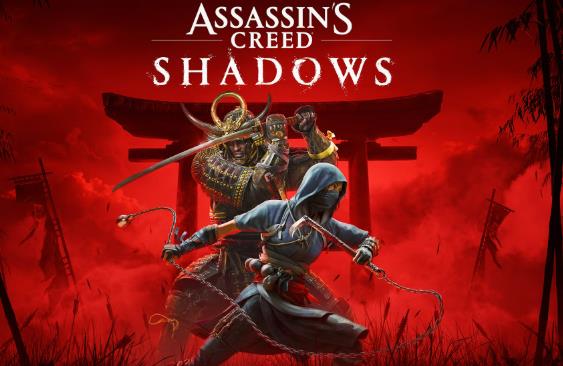
Since its release, Assassin’s Creed Shadows has quickly become one of the most talked-about open-world action games in Western markets. Developed by Ubisoft, this latest mainline entry takes the long-running franchise to feudal Japan, a setting fans have requested for years. After spending dozens of hours exploring its world, completing main missions, and engaging with its systems, it becomes clear that Shadows represents both a confident evolution of the series and a cautious experiment with new ideas.
This review focuses on real gameplay experience, mechanical depth, and overall value—aimed at players looking for a grounded, professional assessment rather than marketing hype.
A Living Open World Set in Feudal Japan
From the moment the game begins, Assassin’s Creed Shadows delivers a strong sense of place. The open world is vast and carefully crafted, featuring dense forests, mountain villages, fortified castles, and bustling towns inspired by Japan’s Sengoku period. Environmental storytelling plays a major role here, making exploration feel purposeful rather than purely decorative.
What stands out most is how the world reacts to time and weather. Dynamic lighting, seasonal changes, and shifting weather conditions directly affect gameplay, especially stealth. Night missions feel genuinely tense, while rain and fog provide natural cover that encourages strategic planning. For fans of immersive open-world RPG mechanics, this is one of the strongest environments Ubisoft has ever produced.
Dual Protagonists with Distinct Playstyles
One of the most significant design decisions in Shadows is the introduction of two playable protagonists, each with a clearly defined identity and gameplay role.
Naoe is built around classic Assassin mechanics. She is fast, agile, and excels at stealth gameplay. Tools like smoke bombs, kunai, grappling hooks, and silent takedowns make her ideal for players who prefer planning routes, managing enemy sightlines, and eliminating targets without being detected.
Yasuke, on the other hand, offers a completely different experience. He is a powerful frontline fighter, designed for direct confrontation. His combat style focuses on strength, heavy weapons, and endurance, making him effective in open battles but less suited for silent infiltration.
Switching between these two characters adds meaningful variety. Certain missions clearly favor one approach over the other, encouraging players to think tactically rather than rely on a single playstyle throughout the game.
Stealth Gameplay and Combat System
Stealth has received a noticeable overhaul in Assassin’s Creed Shadows. The new observation mechanics allow players to mark enemies, identify patrol patterns, and assess environmental threats before committing to an approach. Traditional tools like Eagle Vision return but feel more integrated with the environment rather than acting as a simple shortcut.
Light and shadow play a crucial role. Extinguishing torches, hiding in darkness, and using verticality are no longer optional mechanics—they are core to surviving difficult encounters. This creates a more deliberate stealth experience, closer to classic Assassin’s Creed titles, but with modern design sensibilities.
The combat system is serviceable and more grounded than previous entries. Timing, positioning, and defensive reactions matter more than button-mashing. That said, combat depth can feel limited over long sessions, especially when facing similar enemy types repeatedly. While functional and satisfying in short bursts, combat does not reach the complexity of dedicated action-focused titles.
Technical Performance and Visual Presentation
Visually, Assassin’s Creed Shadows is impressive. Character models are detailed, environments are richly textured, and animations—especially during stealth takedowns—are fluid and cinematic. On current-generation hardware, the game often feels like a true next-gen experience.
However, performance is not entirely flawless. During extended play sessions, minor bugs, occasional frame drops, and loading hiccups can occur, particularly on PC. While patches have improved stability over time, technical inconsistencies still prevent the game from reaching absolute polish.
Despite these issues, the overall presentation remains strong, especially when considering the scale and complexity of the world.
Progression, RPG Elements, and Player Choice
Assassin’s Creed Shadows continues the franchise’s RPG-inspired progression system. Skill trees, gear upgrades, and character customization allow players to tailor their experience to preferred playstyles. While these systems add depth, they remain accessible and do not overwhelm newcomers.
Player choice is present but restrained. Decisions influence certain mission outcomes and character interactions, though the core narrative remains largely linear. This balance ensures narrative coherence while still offering a sense of agency—a design choice that will appeal to players who prefer structured storytelling over fully branching narratives.
A Strong Step Forward with Minor Reservations
After extensive gameplay, Assassin’s Creed Shadows stands as a confident and engaging entry in the franchise. Its open-world design, refined stealth systems, and dual-character approach successfully refresh the series while respecting its roots.
The game is not without flaws. Combat repetition, occasional technical issues, and limited narrative branching may disappoint some players. However, these shortcomings are outweighed by the overall experience, especially for fans of stealth-focused action games and historical open-world adventures.
For players seeking a polished open-world action RPG with a strong emphasis on atmosphere, strategy, and exploration, Assassin’s Creed Shadows is well worth the time.



Leave a Reply